
StudioLife 10X
Studio Life University

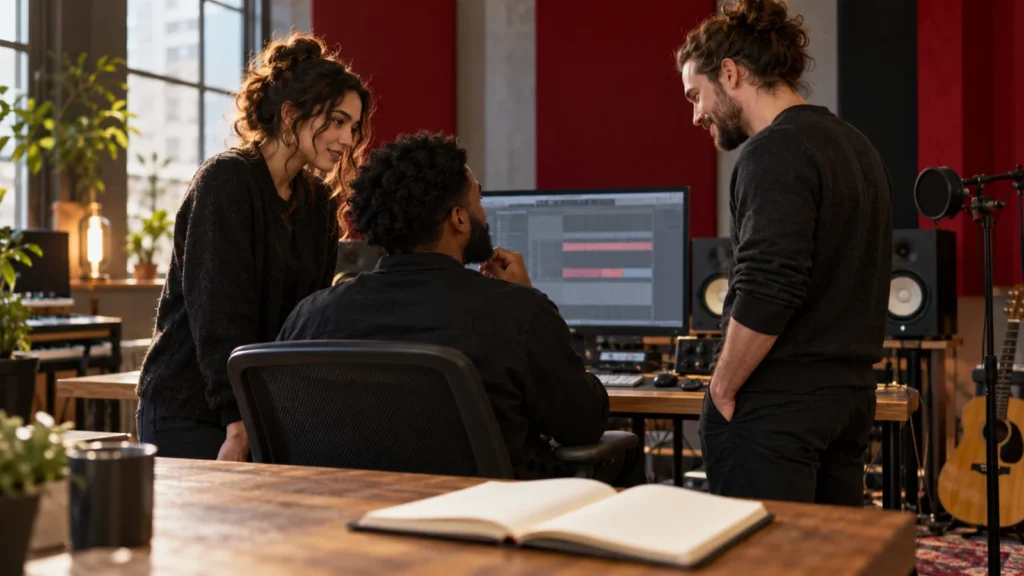
Built for the Grind.
Build knowledge in a useful order. Start with the signal, connect it to a deliberate production process, and learn how to protect and deliver the work. Choose a pathway below or return to a lesson when a real project raises a new question.
Each pathway includes an objective, published lessons, a practical activity and a next step. These are self-directed educational resources. Studio Life University is an educational division of StudioLife 10X, not an accredited institution; no credential, qualification or guaranteed career outcome is offered.
Pathway 1
Recording Foundations
Learning objective: Trace a source, record a usable take and prepare a readable session.
- Studio Life University: Follow a Signal From Source to Speaker
- Gain Staging Without the Magic Number
- Monitoring Latency: A Practical Beginner’s Troubleshooting Lesson
- Build a Recording Session That Another Engineer Can Understand
Practical activity: Draw your signal path, record a short original phrase and reopen the saved session.
Completion check
- I can explain the objective in my own words.
- I completed the practical activity using material I may use.
- I saved the result and noted one question for the next lesson.
Next step: Follow the lessons in order, then revisit the lesson behind an unresolved problem.
Pathway 2
Listening & Production
Learning objective: Describe sound clearly and make deliberate arrangement and mix decisions.
- Build a Critical Listening Practice You Can Repeat
- Arrangement Before Plugins: Make Space for the Main Idea
- EQ and Compression: Two Different Questions in a Mix
Practical activity: Compare two versions of one passage at similar loudness and explain one choice.
Completion check
- I can explain the objective in my own words.
- I completed the practical activity using material I may use.
- I saved the result and noted one question for the next lesson.
Next step: Follow the lessons in order, then revisit the lesson behind an unresolved problem.
Pathway 3
Digital Audio & Delivery
Learning objective: Understand audio data, preserve editable work and inspect the delivered file.
- MIDI and Audio: Two Different Kinds of Studio Information
- Sample Rate and Bit Depth: Learn the Settings Without Chasing Bigger Numbers
- Exporting a Mix: A Delivery Checklist That Prevents Avoidable Rework
- Finish a Small Audio Project: A Studio Life University Capstone
Practical activity: Package a small project with its source, export and a concise readme.
Completion check
- I can explain the objective in my own words.
- I completed the practical activity using material I may use.
- I saved the result and noted one question for the next lesson.
Next step: Follow the lessons in order, then revisit the lesson behind an unresolved problem.
Pathway 4
Gear & Workflow
Learning objective: Choose equipment by the job and evaluate a stable recording setup.
- Choosing an Audio Interface Around the Session You Actually Run
- Microphone Selection Starts With the Room and the Performance
- Studio Monitor Placement: A Better Starting Point Than More Bass
- The 10X Breakdown: Read Gear Specifications Without Buying the Headline
Practical activity: Write an equipment requirements sheet and a practical acceptance test.
Completion check
- I can explain the objective in my own words.
- I completed the practical activity using material I may use.
- I saved the result and noted one question for the next lesson.
Next step: Follow the lessons in order, then revisit the lesson behind an unresolved problem.
Pathway 5
Rights & Creative Business
Learning objective: Distinguish rights, scope and operational responsibilities.
- Own the Conversation: Separate Song Rights From Recording Rights
- Music Royalties: Build a Map Before Expecting a Payment
- Before You Accept a Music-Service Agreement, Clarify the Job
- Price a Creative Project by Scope, Not by Guesswork
- A Client Brief That Prevents the Wrong Kind of Creative Freedom
Practical activity: Draft a project brief and identify questions that require professional advice.
Completion check
- I can explain the objective in my own words.
- I completed the practical activity using material I may use.
- I saved the result and noted one question for the next lesson.
Next step: Follow the lessons in order, then revisit the lesson behind an unresolved problem.
Pathway 6
Technology & Responsible Practice
Learning objective: Evaluate AI tools and protect the work entrusted to you.
- AI in the Studio: Choose a Task Before Choosing a Tool
- Stem Separation: Useful Reference, Not Automatic Permission
- Synthetic Voices: A Consent-First Checklist for Creators
- On the Radar: Evaluate a New Audio Tool Before It Enters a Client Session
- Protect a Creator Business From Account Loss and File Confusion
Practical activity: Create a non-sensitive test plan that includes permission and recovery checks.
Completion check
- I can explain the objective in my own words.
- I completed the practical activity using material I may use.
- I saved the result and noted one question for the next lesson.
Next step: Follow the lessons in order, then revisit the lesson behind an unresolved problem.
How to use the pathways
Keep a short learning journal: the question, what you tried, the result and what remains unclear. Use material you are authorized to record and process. Follow equipment instructions, listen at comfortable levels and seek qualified advice for consequential legal, financial or health questions.
Continue your learning
Recording Fundamentals
Learning objective: Build a clean recording route, support the performer, and diagnose capture problems.
Start with the foundations
- Build a Recording Session That Another Engineer Can Understand
- Gain Staging Without the Magic Number
- Studio Life University: Follow a Signal From Source to Speaker
- Monitoring Latency: A Practical Beginner’s Troubleshooting Lesson
Build your practice
Practical activity: Record an original short passage, document the route, and explain one change made after listening.
Next step: Keep a brief learning journal and return to the lesson behind an unresolved question. Additional lessons appear here as they are published.