Studio Monitor Placement: A Better Starting Point Than More Bass
Studio monitors are part of a listening system that includes the room, desk and listener.
Start reading ↓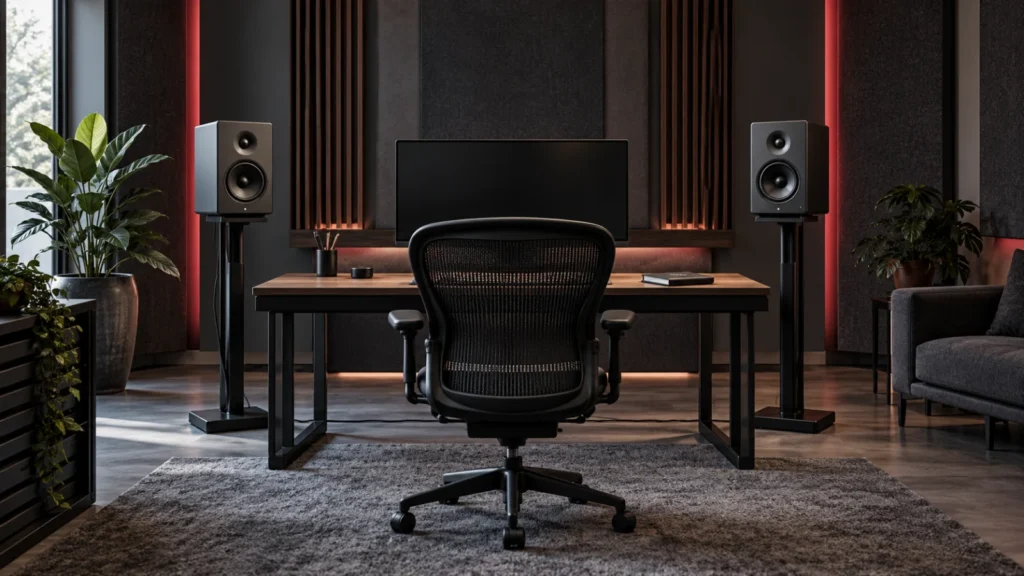
In this guide
Studio monitors are part of a listening system that includes the room, desk and listener. Moving the speakers or listening position can change what you hear before any equalizer is adjusted. The goal is not to force every room into a perfect diagram. It is to build a repeatable listening position and identify the compromises clearly. This is placement education, not a measured assessment of a particular room.
Establish a balanced listening position
Begin with the monitor manufacturer's positioning guidance. For stereo listening, a useful starting point is a symmetrical relationship between the two speakers and the listener. Try to keep corresponding nearby boundaries similar on the left and right, and follow the guidance for listening-axis height and speaker orientation.
Practical limitations matter. A bedroom studio may have a doorway, window or desk that prevents ideal symmetry. Record those constraints rather than hiding them. Move one variable at a time so the result teaches you something. A photograph and a few measurements make it easier to return to a useful position after rearranging equipment.
Look beyond the speakers themselves
The desktop can introduce reflections, and corners and nearby walls affect the overall response. A stand may provide more placement freedom than setting a speaker directly behind the keyboard. Check stability, weight limits and cable reach before trying an arrangement. Do not create a tipping or trip hazard in pursuit of a diagram.
Distinguish acoustic treatment from sound isolation. Material that changes reflections inside a room does not automatically prevent sound from reaching neighbors. Likewise, foam placed randomly around a room is not a substitute for understanding the problem. Follow appropriate building and fire-safety guidance for any installed material.
Listen at a consistent, sensible level
Use familiar, legally accessed reference recordings and a comfortable level. Compare broad characteristics: vocal position, low-frequency balance, stereo focus and whether a decision translates to another listening system. Avoid treating a single favorite track as a universal target.
If using measurement software, learn what it measures and how microphone placement affects results. A graph can reveal problems but does not by itself prescribe a safe, effective correction. Do not apply extreme boosts to fill every dip. Consult appropriate guidance when the room's behavior is difficult to interpret.
Write a placement log
Create a simple table: speaker position, listener position, angle, level setting and listening notes. Make one change, listen again and compare notes. Keep the version that provides a more reliable basis for decisions, even if it does not look impressive in a photograph.
The practical outcome is consistency. A producer who knows a modest monitoring setup can make more informed decisions than one who constantly changes equipment without a reference. Key takeaway: establish positioning and listening habits before assuming that a larger speaker, more bass or automatic correction will solve the room.
Sources & further reading
Source review: October 29, 2026. This is a researched educational feature, not an interview or a claim of firsthand testing. Legal, health and business decisions require context-appropriate professional guidance.