Gain Staging Without the Magic Number
Gain staging means managing level through a signal path.
Start reading ↓
In this guide
Gain staging means managing level through a signal path. It is not a requirement to make every meter display one favorite number. A sensible approach keeps the recorded source usable, avoids unwanted overload and leaves enough control for the next stage. The details differ between analog inputs, converters, plugins and outputs, so one rule cannot describe every point in the chain.
Trace the path before moving a control
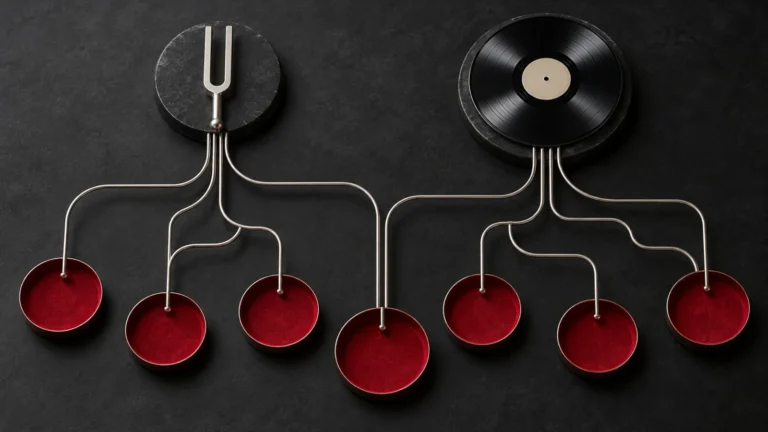
Draw a simple route: source, microphone, preamp, converter, track, processing, bus and output. Identify which control changes the level at each stage and which meter shows it. Turning a track fader down does not repair distortion already recorded at the input. Similarly, a quiet master meter does not prove that an earlier processor was never overloaded.
Some digital systems use floating-point processing with substantial internal headroom, but that does not make analog input overload harmless or remove every plugin's level-dependent behavior. Follow the relevant equipment and software documentation. Treat a red indicator as a reason to investigate its meaning at that specific stage.
Record the performance you are actually expecting
Ask for a representative loud passage during setup rather than only a whispered sound check. Leave room for normal performance variation and listen to the recording. A clean, manageable take is more valuable than a waveform that fills the screen.
Do not compensate for a poor source arrangement by increasing gain indefinitely. Excessive room noise, an unsuitable microphone position or a very quiet performance may require a different practical solution. Keep monitoring at a comfortable level so recording decisions are not driven by the need to hear everything louder.
Compare processing at a fair listening level
When adding an equalizer, compressor or saturation effect, compare bypassed and processed sound at similar perceived loudness. A small output increase can make a change seem more successful than it is. Use the processor's output control deliberately, and listen in the full arrangement.
If a plugin is intended to respond to input level, that behavior is part of the sound. Read its documentation rather than assuming all processors are transparent below clipping. Save a version before making major changes so a level adjustment does not accidentally become a permanent creative commitment.
Check the delivery stage separately
The final export must meet the recipient's stated requirements. Confirm format and level expectations rather than applying a universal streaming target to every job. Listen to the exported file, not only the live session, and inspect its start, end and loudest sections.
Keep a brief note of any unusual gain adjustment or processing decision that affects a handoff. Key takeaway: good gain staging is a sequence of appropriate decisions at identifiable points. It protects the recording and makes comparisons honest; it does not require every project to obey the same meter reading.
Sources & further reading
- StudioLife 10X: EQ and Compression: Two Different Questions in a Mix
- StudioLife 10X: Microphone Selection Starts With the Room and the Performance
Source review: October 29, 2026. This is a researched educational feature, not an interview or a claim of firsthand testing. Legal, health and business decisions require context-appropriate professional guidance.