Stem Separation: Useful Reference, Not Automatic Permission
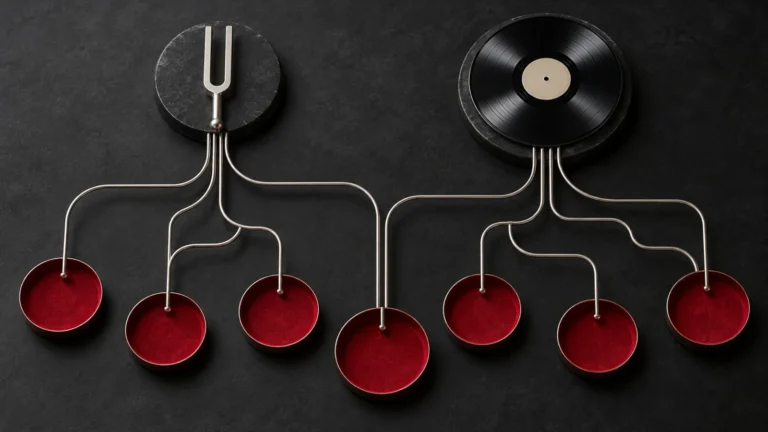
Stem-separation software estimates components of an existing recording.
Start reading ↓
In this guide
Stem-separation software estimates components of an existing recording. It can be useful for an authorized production task, but an extracted vocal or instrumental is not automatically a clean multitrack source or a licensed asset. Keep technical possibility separate from permission, and evaluate the result by listening rather than by the number of files produced.
Know what the files represent
An original multitrack session contains the recorded sources and production choices available at that stage. A separation system works from a combined recording and estimates parts. Its outputs can contain bleed, missing details or processing artifacts. The label vocal does not prove that only the vocal remains.
Listen to each output and to the recombined result where appropriate. Check transitions, reverberant endings, percussion and material shared by several parts. A file that seems usable alone may behave differently when edited or processed. Preserve the unmodified source so the separation can be assessed honestly.
Establish permission before production use
Owning a copy of a recording is different from owning rights to reuse its components. A platform allowing an upload or a tool producing a downloadable stem does not clear copyright or contractual restrictions. Identify the recording, underlying composition and intended use before assuming a separated part can be released.
Fair-use questions are context-dependent and should not be reduced to a fixed duration or a claim that educational intent always resolves permission. For a consequential project, obtain appropriate rights advice and the necessary licenses. Do not distribute extracted material merely because it is technically possible.
Test with material you control
A sensible evaluation uses a recording you are authorized to process. Define the purpose: rehearsal reference, restoration work or an agreed remix task. Compare the estimate with available original sources when you have them, and note what the system loses or alters.
Avoid judging a tool from a single favorable passage. Quiet sections, dense arrangements and abrupt edits may reveal different limitations. Document the input version and processing settings so a later collaborator understands how the files were created.
Label the handoff accurately
Call estimated components separated stems rather than original multitracks. Include any relevant limitations and avoid claims of lossless recovery unless that has actually been established. Keep permission records separate from the audio package and do not expose private client material.
Key takeaway: separation can provide a useful working reference or authorized production resource, but it does not reconstruct history perfectly or create reuse rights. A professional workflow preserves the source, checks artifacts and treats licensing as an independent requirement.
Sources & further reading
- U.S. Copyright Office: Permission and fair use FAQ
- U.S. Copyright Office: Copyright and Artificial Intelligence — Part2
Source review: October 29, 2026. This is a researched educational feature, not an interview or a claim of firsthand testing. Legal, health and business decisions require context-appropriate professional guidance.