Own the Conversation: Separate Song Rights From Recording Rights
When collaborators say we own the song, they may be discussing different things.
Start reading ↓
In this guide
When collaborators say we own the song, they may be discussing different things. A composition and a particular recording of it are distinct assets. Understanding that distinction is a starting point for useful conversations about releases, permissions and income. It does not settle a specific contract or replace advice from a qualified professional familiar with the relevant jurisdiction.
Identify what was created
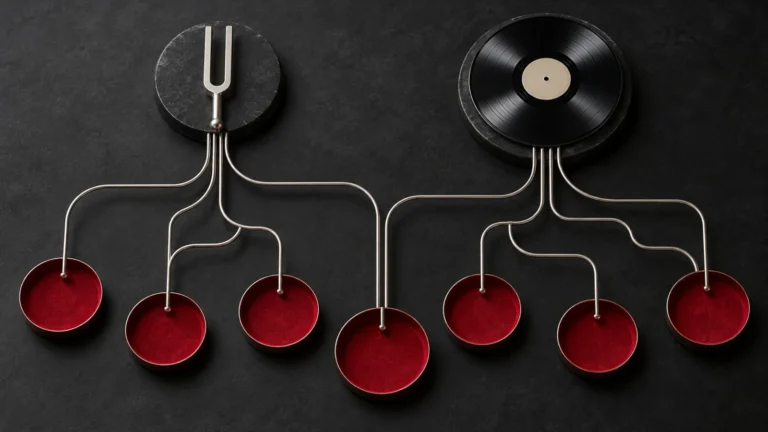
The U.S. Copyright Office explains that a musical work and a sound recording are separately protected types of work. The first concerns the underlying composition; the second concerns the recorded performance. The same people can be involved in both, but the ownership and licensing arrangements need not be identical.
Make two lists for a project. One describes composition contributions and the other describes the recording, participants and production arrangements. Do not assume that paying for a session automatically resolves every ownership question, or that a creative credit necessarily describes a transfer of rights. The applicable facts and written agreements matter.
Record agreements before a release
A practical project record should identify participants, contact channels, the works involved, agreed credits and the documents that govern ownership or permission. Keep a dated record of changes. If the discussion involves percentages, identify exactly what the percentages refer to rather than leaving them attached to the vague word rights.
Ask a professional to review an agreement when the stakes or uncertainty justify it. A template can prompt questions, but it may not fit the relationship or local law. Do not sign away rights you do not understand in order to preserve momentum in a session.
Keep permission questions separate from distribution
An upload service accepting a file does not demonstrate that all rights have been cleared. A collaborator's assurance, a platform form and a legally sufficient permission are different things. Identify samples, external recordings, artwork and other third-party material before release preparation becomes urgent.
Store licenses and correspondence with the project. Note restrictions, duration, territories and intended uses where those appear in the agreement. If a proposed later use falls outside the original arrangement, revisit it rather than assuming the first approval covers everything indefinitely.
Build a rights-aware handoff
Give the distributor or release coordinator accurate credits and approved identifiers, but keep sensitive agreements in an appropriately protected location. A public press kit should not include private signatures, personal addresses or account credentials. Maintain a clear distinction between information intended for public display and material needed to administer rights.
The practical goal is not to make every creator a lawyer. It is to recognize which question belongs to which asset and when uncertainty needs expert attention. Key takeaway: name the composition and the recording separately, document the relevant agreements and do not mistake technical release readiness for permission to use every element.
Sources & further reading
- U.S. Copyright Office: What Musicians Should Know About Copyright
- U.S. Copyright Office: Circular56 — Sound Recordings
Source review: October 29, 2026. This is a researched educational feature, not an interview or a claim of firsthand testing. Legal, health and business decisions require context-appropriate professional guidance.